
Call Us
Pressure Regulators in Pico Rivera, CA
Protect your plumbing system and appliances with expert water pressure regulator installation and replacement in Pico Rivera and the surrounding areas.
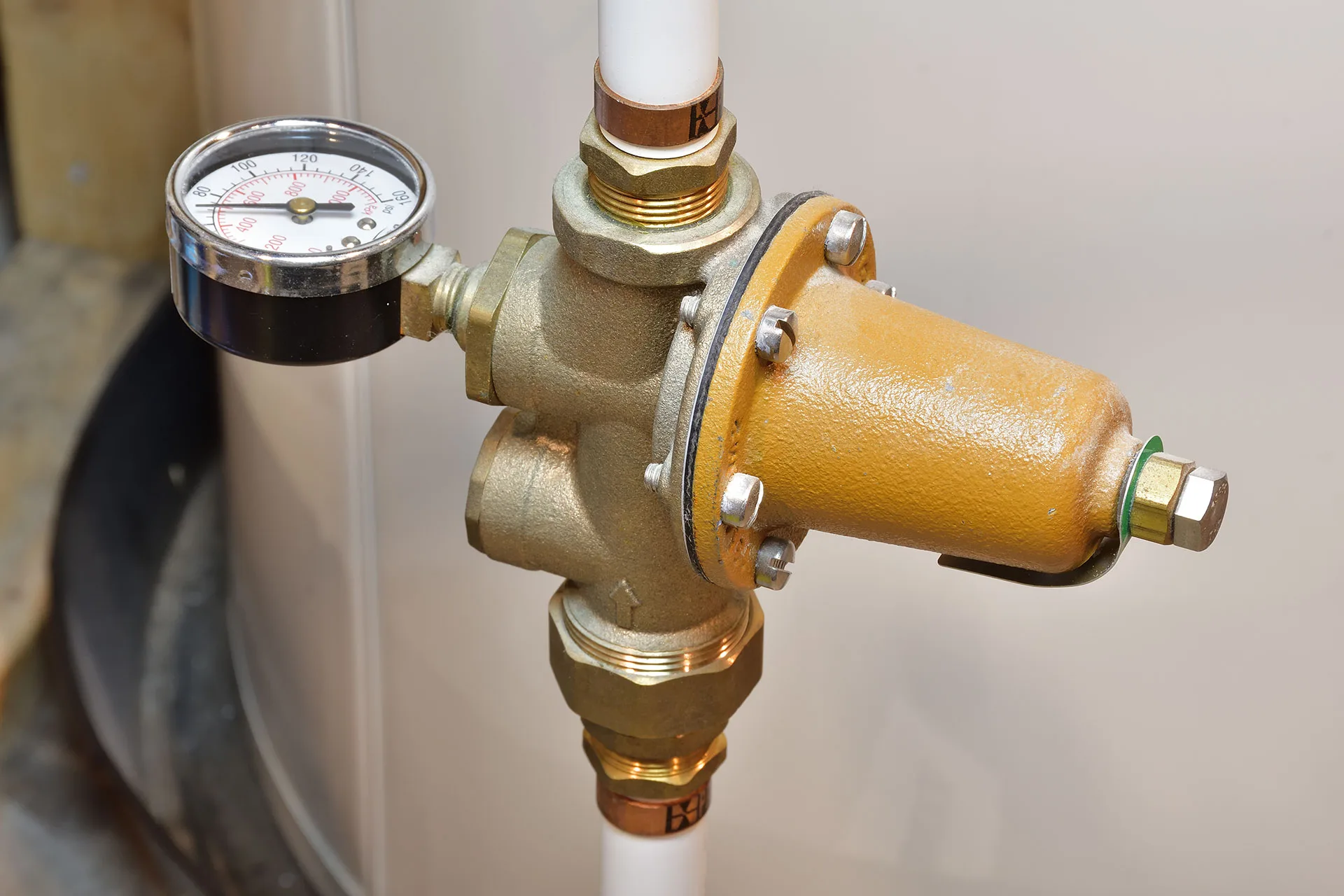
Water Pressure Regulator Installation & Replacement in Pico Rivera and the Surrounding Areas
Consistent, balanced water pressure isn’t just about comfort — it’s essential for protecting your plumbing system and the water heater you just had installed. At Water Heater Genius, we install and replace high-quality water pressure regulators that maintain safe, steady pressure throughout your home.
Our licensed technicians will assess your existing system, measure your static water pressure with a gauge — the California Plumbing Code caps it at 80 psi — and install the right regulator to prevent damage to pipes, fixtures, and appliances. Whether you’re dealing with fluctuating pressure, noisy pipes, or leaks, our team ensures your plumbing operates efficiently and safely for years to come.
Our Benefits
- Licensed, Bonded & Experienced Technicians – Professionally trained to install and calibrate all types of pressure regulators.
- Protects Your Plumbing System – Prevents leaks, bursts, and premature wear on pipes and fittings.
- Extends Appliance Lifespan – Helps water heaters, dishwashers, and washing machines perform better and last longer.
- Improves Water Efficiency – Maintains optimal flow while reducing unnecessary water waste.
- Set to the Code Limit – The California Plumbing Code requires static pressure of 80 psi or less; we set the regulator below that for your home’s plumbing and fixtures.
- Quick, Clean Installations – Fast service with minimal disruption to your home.
- Upfront, Honest Pricing – No hidden costs or unnecessary repairs — just straightforward solutions.
- Serving Pico Rivera and the Surrounding Areas – Trusted by homeowners across the San Gabriel Valley and nearby communities.
High water pressure may seem harmless, but over time, it can cause serious damage to your home’s plumbing system. Without a functioning pressure regulator, your pipes, water heater, and fixtures are constantly under strain — increasing the risk of leaks, bursts, and costly repairs.
At Water Heater Genius, we provide professional installation and replacement of residential water pressure regulators. Our team uses precise gauges to test your system’s pressure, then installs a regulator calibrated to your home’s exact needs. If your current regulator is failing or outdated, we’ll replace it with an approved regulator, preceded by the strainer the code calls for, sized to keep your water pressure consistent and your home protected.
The 80 psi Rule
The requirement is specific. Section 608.2 of the California Plumbing Code says that where static water pressure in the supply piping exceeds 80 psi, an approved pressure regulator preceded by an adequate strainer must be installed and the static pressure reduced to 80 psi or less. The same section requires an approved expansion tank in the cold water piping downstream of the regulator, because a regulator closes the system and heated water needs somewhere to expand. Pico Rivera adopted the 2025 edition of the code by ordinance in November 2025.
Why 80 psi. The code’s publisher gives the reasons: above that level water hammer, splashing, wasted water, and discharge from relief valves all increase, and fixture and appliance valves are pushed past the pressure they were designed for. A storage water heater is the largest pressure vessel in the house, which is why excess pressure often shows up first as a dripping temperature-and-pressure relief valve.
What we do on site. We read static pressure with a gauge. If it is over 80 psi we install or replace the regulator and strainer at the service entry, add or check the expansion tank at the water heater, and set the pressure below the limit. If it reads 80 psi or under, we tell you a regulator is optional.
Water Heater Pressure Relief Valve Leaking: Why It Drips
A relief valve that drips is usually doing its job: pressure inside the tank is climbing past what the valve allows, either because street pressure is over 80 psi or because heated water has nowhere to expand in a closed system. Less often the valve itself is worn and leaks at normal pressure. Never cap or plug the relief pipe; it is the heater’s last safety device.
| Cause | How it shows | Fix | Book price |
|---|---|---|---|
| Street pressure over 80 psi | Drips often; other fixtures bang or run | Regulator and strainer at the service entry (CPC 608.2) | Quoted on site |
| Thermal expansion in a closed system (a regulator or check valve with no expansion tank) | Drips during or after a heating cycle | Expansion tank on the cold line | Quoted on site |
| A worn valve | Drips at normal pressure | Replace the T&P valve | $295; valve only on outdoor units $195 |
If the water coming out is very hot, or the valve is spraying rather than dripping, turn the heater off and call; that can mean the tank is overheating. The valve itself is also on our maintenance checklist, because a valve that has never been tested is the one most likely to be seized.
How to Tell if Your Water Pressure Is Too High
Screw a water pressure gauge onto an outdoor hose faucet, make sure nothing inside is running, and open the faucet all the way. A reading above 80 psi is over the limit the California Plumbing Code sets, and a dripping relief valve, banging pipes and toilets that keep running are the usual signs before anyone measures.
How to Check Water Pressure in Your House
- Buy a water pressure gauge with a hose thread; hardware stores carry them.
- Screw it onto an outdoor hose faucet, or the drain valve on the water heater if there is no outdoor faucet nearby.
- Make sure no water is running inside the house, including the washer, the dishwasher and any irrigation.
- Open the faucet all the way and read the gauge. That is your static pressure.
- Read it again at a different time of day, since street pressure changes with demand on the main.
A reading above 80 psi is what the code acts on. If you would rather not do it yourself, we read static pressure with a gauge on every regulator visit.
What Pressure Is Recommended for a Home?
The code sets the ceiling at 80 psi, and the code’s publisher gives the reasons above. We set a regulator below 70 psi, under the code’s 80 psi ceiling: high enough for a good shower upstairs and low enough to keep fixture and appliance valves inside their design limits.
Pressure Regulator Prices
A pressure regulator is quoted on site after we read your static pressure with a gauge, because the regulator size, the strainer, and whether the water heater needs an expansion tank all depend on that reading. The quote is in writing before any work starts. A new 3/4-inch cold water inlet ball valve at the water heater is $249. Our book prices for replacements, repairs and maintenance are on the pricing page.
Frequently Asked Questions
What does a water pressure regulator do?
It reduces the incoming pressure from the water main to a safe, consistent level for your plumbing. The California Plumbing Code (Section 608.2) sets the ceiling: if static pressure exceeds 80 psi, a regulator with a strainer must be installed and the pressure brought to 80 psi or less.
How do I know if my pressure regulator needs to be replaced?
Signs include banging or noisy pipes, inconsistent water pressure, leaking fixtures, or short-lived appliances. Our technicians can test your system and confirm whether a new regulator is needed.
How often should pressure regulators be replaced?
Most pressure regulators last between 10 and 15 years. However, hard water and high usage can shorten their lifespan, so regular inspection is recommended.
Can high water pressure damage my water heater?
Yes. The water heater is the largest pressure vessel in the house, so pressure over 80 psi shows up there first, as a relief valve that drips and as extra strain on the tank and its fittings. A regulator set below 70 psi, with an expansion tank on the cold line, protects it.
Is a pressure regulator required in Pico Rivera?
When static pressure exceeds 80 psi, yes. Pico Rivera adopted the 2025 California Plumbing Code, and Section 608.2 requires an approved regulator preceded by a strainer wherever supply pressure is above that limit, with an expansion tank downstream of the regulator. If your pressure reads 80 psi or below, a regulator is optional. We measure it before recommending anything.
Why is my water heater relief valve dripping?
Usually because pressure inside the tank is climbing past what the valve allows: street pressure over 80 psi, or heated water with nowhere to expand in a closed system. Less often the valve itself is worn and leaks at normal pressure. Never cap the relief pipe; a regulator, an expansion tank or a new valve is the fix.
Hear from Our Clients
20+ 5-Star Google Reviews
Rated
5 of 5 in 20+ Google Reviews
“Our water heater finally gave out. I called Water Heater Genius, they came out quickly, and it was fixed for cheaper than I expected.”
- Bob A.
What Sets Us Apart
Why Choose Our Pressure Regulator Services
At Water Heater Genius, we combine technical expertise with a commitment to long-term home protection. From diagnosing pressure problems to precise regulator installation, we ensure your plumbing system performs safely and efficiently. Homeowners across Southern California trust us for honest service, quality parts, and professional results every time.
Every installation and adjustment is performed by licensed professionals who know your plumbing inside and out.
Proudly providing water pressure regulator services throughout Pico Rivera and the surrounding areas.
We provide upfront estimates and clear communication — no hidden fees, no surprises.
Our regulators help safeguard your water lines, fixtures, and appliances from unnecessary stress and wear.
Get In Touch With Us